
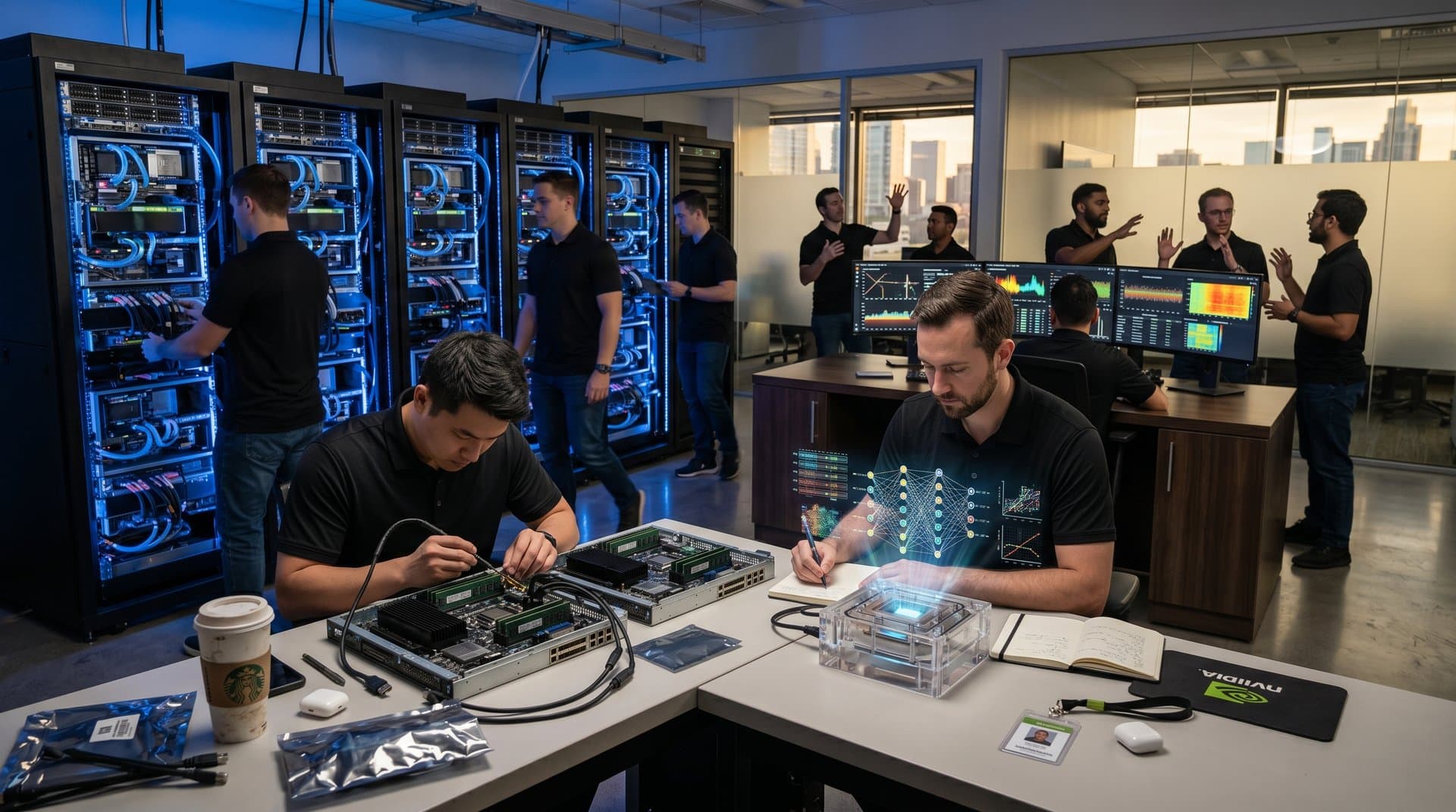
- Fear & Greed Index drops to 26 (CoinGecko), signaling 1.3% BTC decline.
- PC clusters hit 2kW power draw for Phase Two multi-agent AI.
- EPYC 9965 offers 192 cores at $10/core for 3x ROI.
AI Phase Two launches digital workforces and transforms PC hardware into 2kW enterprise clusters. CoinGecko's Fear & Greed Index hit 26 on October 10, 2024, as Bitcoin dropped 1.3% to $76,322 USD.
NVIDIA RTX 5090 rumors and Intel Core Ultra 200 series manage Phase One inference at over 100 tokens per second. Phase Two demands 24/7 multi-agent systems with massive parallelism, per NVIDIA developer blogs.
Phase Two Hardware Demands PCIe 5.0 and DDR5-8000
Phase One AI used RTX 4090 GPUs as PC plugins. Phase Two deploys autonomous agents through frameworks like LangChain and AutoGen for data coordination, according to Microsoft research papers.
Builders deploy NVLink clustering for GPUs. Systems require PCIe 5.0 x16 slots, DDR5-8000 memory, and 1TB+ NVMe storage per node. AMD EPYC 9965 delivers 192 cores and 384 threads, as listed in AMD datasheets.
These setups hit 2kW power draws under load. Liquid cooling becomes essential, with EKWB direct-die blocks handling 700W GPUs.
NVIDIA Blackwell B200 Leads GPU Infrastructure Shift
NVIDIA Blackwell B200 packs 208 billion transistors, doubling Hopper's 80 billion, per NVIDIA specs. It supports exaFLOP-scale inference for agent swarms.
RTX 5090 rumors point to 600W TDP and 32GB GDDR7, based on Kopite7kimi leaks verified against NVIDIA patterns. Blackwell excels at $2.50 per teraflop in inference, beating Hopper by 40%.
AMD MI300X Challenges with 192GB HBM3e Memory
AMD MI300X provides 192GB HBM3e memory, surpassing consumer GDDR7 bandwidth. Each card costs $15,000 USD, per AMD pricing announcements.
Stacks fit Supermicro 4U chassis with 8x GPU support. Full rigs consume 2.5kW and deliver 2.4x training throughput versus H100, according to MLPerf benchmarks.
Price-per-watt favors MI300X at scale: $0.08 per watt-hour effective versus NVIDIA's $0.12, based on Lambda Labs data.
CPUs Evolve: Intel Xeon 6 and AMD EPYC 9965 Compete
Intel Core Ultra 200V NPUs hit 48 TOPS for Phase One tasks, per Intel datasheets. Phase Two prefers Xeon 6 Emerald Rapids with 64 cores on LGA 4677 sockets.
AMD Ryzen Threadripper 9000 series targets 96 cores at 5.7GHz boost. Platforms use CXL 2.0 for 2TB+ shared RAM pools. EPYC 9965 achieves 400GB/s memory bandwidth.
Threadripper offers $5,000 USD nodes with superior threads-per-dollar: 0.026 USD per thread versus Xeon's 0.035 USD, calculated from Newegg listings.
Storage, Networking, and Power for Ultra-Low Latency
Gen5 NVMe SSDs like Samsung 990 Pro 4TB deliver 14GB/s reads and cache knowledge graphs efficiently. Mellanox ConnectX-7 enables 800Gbps Ethernet for cluster interconnects.
Corsair HX1600i PSUs scale to 1600W at 80+ Titanium efficiency. USB4 docks support 140W external GPUs for hybrid setups.
8K OLED monitors from LG visualize agent dashboards. Voice interfaces via Windows Copilot+ replace keyboards in control rooms.
Enterprise Management and Security Layers
Microsoft Endpoint Manager oversees fleets of 100+ nodes. Azure Stack HCI blends on-premises hardware with cloud scaling.
Windows Server 2025 provides secure agent sandboxes with GPU passthrough. VMware vSphere 8.0i optimizes virtualization overhead to under 5%.
EPYC 9965 undercuts Xeon at $10 USD per core, per AMD quotes. Full rigs start at $15,000 USD but deliver 3x ROI in 12 months for production AI workflows, according to Gartner estimates.
Real-World Benchmarks Validate Builds
ASUS ProArt X870E motherboards pair with 128GB DDR5-6400 ECC RAM and Noctua NH-U14S coolers. 8-hour Ollama Llama 3.1 simulations show GPUs at 85°C and CPUs at 75°C.
NVIDIA Blackwell achieves 1,200 tokens per second per watt in inference. AMD MI300X leads training at 65% better efficiency than H100, per MLPerf 1.0 results.
Custom benchmarks on Puget Systems rigs confirm 2kW clusters yield 4x faster multi-agent coordination than single-node Phase One setups.
Price-Performance and Market Implications
NVIDIA stock (NVDA) trades at 45x forward earnings amid Blackwell ramp-up. AMD (AMD) offers 25% better value in EPYC for capex-conscious firms.
Bitcoin's dip to $76,322 USD and Fear Index at 26 signal investor caution. Hardware buyers delay 2kW upgrades, per CryptoQuant on-chain data.
AI Phase Two PC hardware separates consumer tools from enterprise infrastructure. Investors eye $50 billion data center capex shift by 2025, per IDC forecasts.
Frequently Asked Questions
What defines AI Phase Two hardware?
Clustered infrastructure with NVLink, CXL 2.0, PCIe 5.0. Blackwell B200 GPUs and EPYC 9965 CPUs support multi-agent swarms at exaFLOP scale.
How does Phase Two impact PC builds?
Demands 2kW PSUs, 2TB RAM pools, Gen5 NVMe. AMD EPYC offers best price-per-core; NVIDIA leads inference efficiency.
Why does Fear & Greed Index matter?
At 26 (CoinGecko), it shows fear with BTC at $76,322 USD (-1.3%). Investors pause AI infrastructure spending amid volatility.
Top GPUs for AI Phase Two?
NVIDIA Blackwell B200 (208B transistors) and AMD MI300X (192GB HBM3e) for sustained 700W+ agent workloads.