
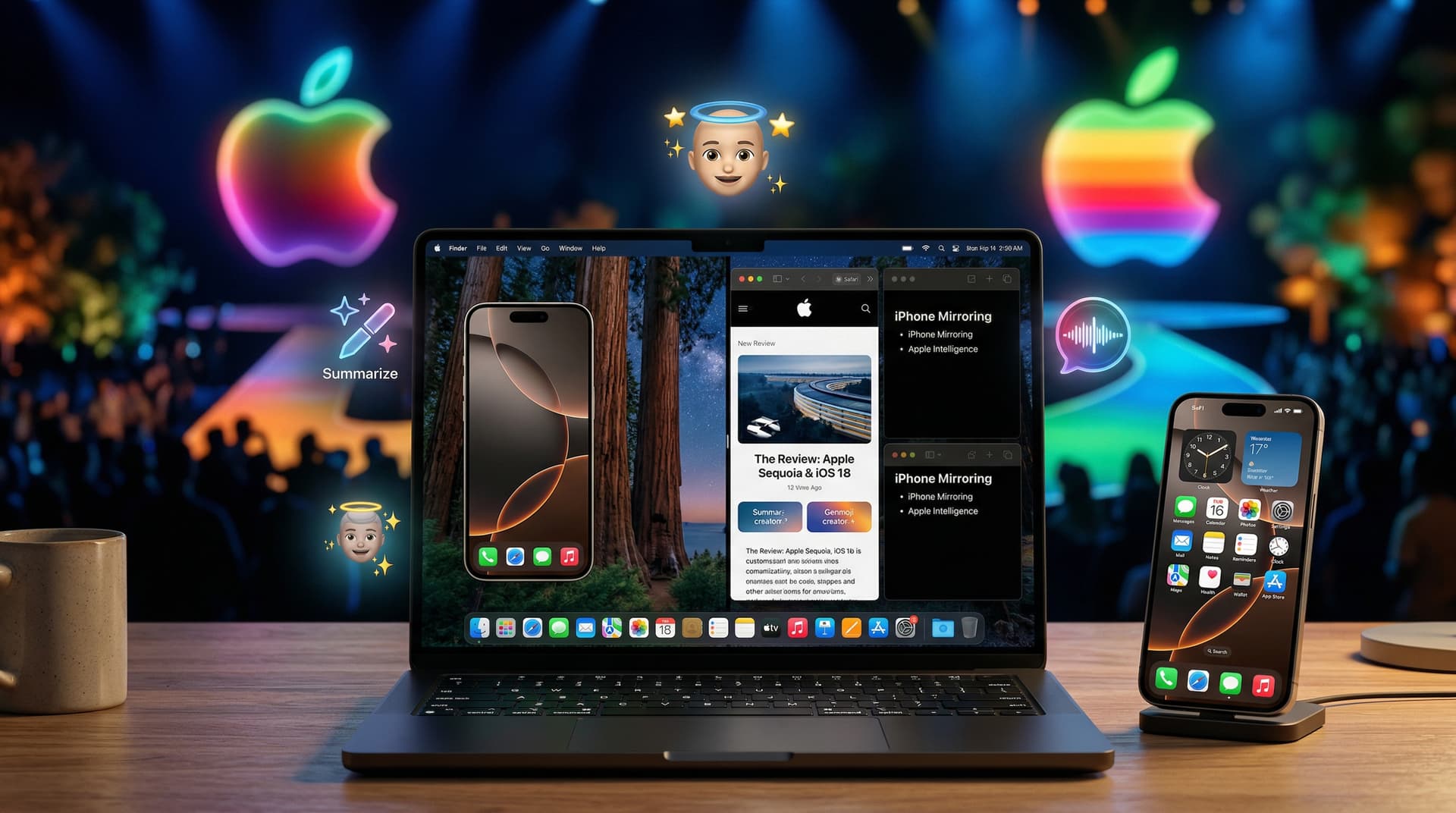
On September 9, 2024, Apple held its highly anticipated 'Glowtime' event at the Apple Park in Cupertino, California, unveiling not just the iPhone 16 series but a suite of groundbreaking software updates. While hardware often steals the spotlight, the software announcements—particularly macOS Sequoia (version 15) and iOS 18—deserve equal billing. These updates introduce Apple Intelligence, a suite of AI-driven features, alongside practical enhancements for productivity and cross-device continuity. For PC users invested in the Apple ecosystem, especially those on MacBooks and iMacs, these changes signal a major evolution in daily computing.
macOS Sequoia: A Leap in macOS Productivity
macOS Sequoia builds on the foundation laid by Sonoma, focusing on refinement and intelligence. One standout feature is iPhone Mirroring, allowing users to control their iPhone directly from their Mac. Imagine dragging files from your Mac to your iPhone's screen or running iPhone apps seamlessly on a larger display—perfect for developers testing mobile apps or professionals managing notifications without touching their phone. This Continuity feature requires an iPhone on iOS 18 and a Mac with Apple silicon (M1 or later), but it promises to blur the lines between devices like never before.
Window management gets a significant upgrade with native window tiling. Inspired by competitors like Microsoft's Windows Snap Layouts but tailored for macOS, users can now drag windows to screen edges or corners for automatic resizing and snapping. Hold the Option key while hovering over the green maximize button, and you'll see tiling options. This addresses a long-standing pain point for Mac power users juggling multiple apps, making multitasking on larger displays (like the new iMacs) far more intuitive.
Safari receives enhancements too. Highlights uses on-device intelligence to surface key information like summaries, directions, or quick links from webpages—think extracting a recipe's ingredients or a movie's showtimes without leaving the browser. Reader mode improves with customizable fonts, colors, and text sizes, while a new Distraction Control lets you hide intrusive elements like cookie banners.
The Passwords app debuts as a standalone hub for managing credentials, Wi-Fi passwords, and two-factor codes, syncing via iCloud Keychain. It's a welcome centralization, especially with passkeys gaining traction as a phishing-resistant alternative to traditional passwords.
Apple Intelligence: On-Device AI for Macs
At the heart of both macOS Sequoia and iOS 18 is Apple Intelligence, Apple's privacy-focused AI platform. Unlike cloud-heavy rivals, most processing happens on-device using Apple silicon's Neural Engine. Features rolling out in beta include Writing Tools for rewriting, proofreading, and summarizing text across apps like Mail, Notes, and third-party ones. Image Playground generates images from text prompts, integrated into Messages and Freeform.
Genmoji lets you create custom emojis from descriptions or photos, adding fun to iMessage. Clean Up in Photos removes distracting objects from images, akin to Google's Magic Eraser. Notification summaries condense stacks of alerts into digestible overviews, reducing overwhelm.
Siri gets a brain boost with personal context understanding—ask 'What’s on my calendar for skiing?' and it pulls from emails and notes. ChatGPT integration (opt-in) handles complex queries Siri can't, without needing an account. These features launch in the U.S. with English, expanding later, and require specific hardware like M1 Macs or A17 Pro iPhones.
iOS 18: Customization and Control
iOS 18 brings unprecedented home screen freedom. Apps can be rearranged freely, icons darkened or tinted, and widgets made interactive. The Control Center is fully customizable with drag-and-drop controls. Photos app redesigns with Collections surfacing memories by theme, while Math Notes in Calculator solves handwritten equations.
Privacy shines with app locking and hidden folders. RCS support improves messaging with Android users, adding typing indicators and high-res media.
Cross-Platform Synergy and Release Timeline
These updates emphasize ecosystem unity. Presenter Overlay in video calls shows your facecam over shared content in FaceTime, Zoom, and others. Math Notes syncs across iPhone, iPad, and Mac.
Public betas for macOS Sequoia, iOS 18, iPadOS 18, watchOS 11, tvOS 18, and visionOS 2 are available now via Apple's Beta Software Program. Full releases arrive this fall, with Apple Intelligence in October for compatible devices.
Implications for PC Users and the Broader Market
For Mac users—Apple's 'PCs'—Sequoia elevates the platform against Windows 11 and Linux distros. Window tiling rivals Microsoft's offerings, while iPhone Mirroring outshines Windows Phone Link. Apple Intelligence positions Apple in the AI race, emphasizing privacy over the data-hungry approaches of Google Gemini or OpenAI's GPT.
Developers gain Swift 6 in Xcode 16 for better concurrency and Playgrounds with live previews. Gaming improves with Game Porting Toolkit 2 supporting more Windows titles via DirectX translation.
Critics note AI features' delayed rollout and U.S.-only start, but the betas show promise. Security remains paramount, with new Malicious Software Removal Tool updates.
Competition and Future Outlook
Microsoft's Copilot+ PCs and Windows 11 24H2 aim for similar AI feats, but Apple's closed ecosystem ensures tighter integration. Google's Android 15 counters with Gemini Nano on-device AI.
As betas roll out, expect feedback-driven refinements. By December 2024, full deployments could redefine productivity on Apple silicon Macs.
In summary, macOS Sequoia and iOS 18 aren't just updates—they're a cohesive vision for intelligent, seamless computing. Mac enthusiasts, dive into the public beta and prepare for a glowing future.
Word count: 912