
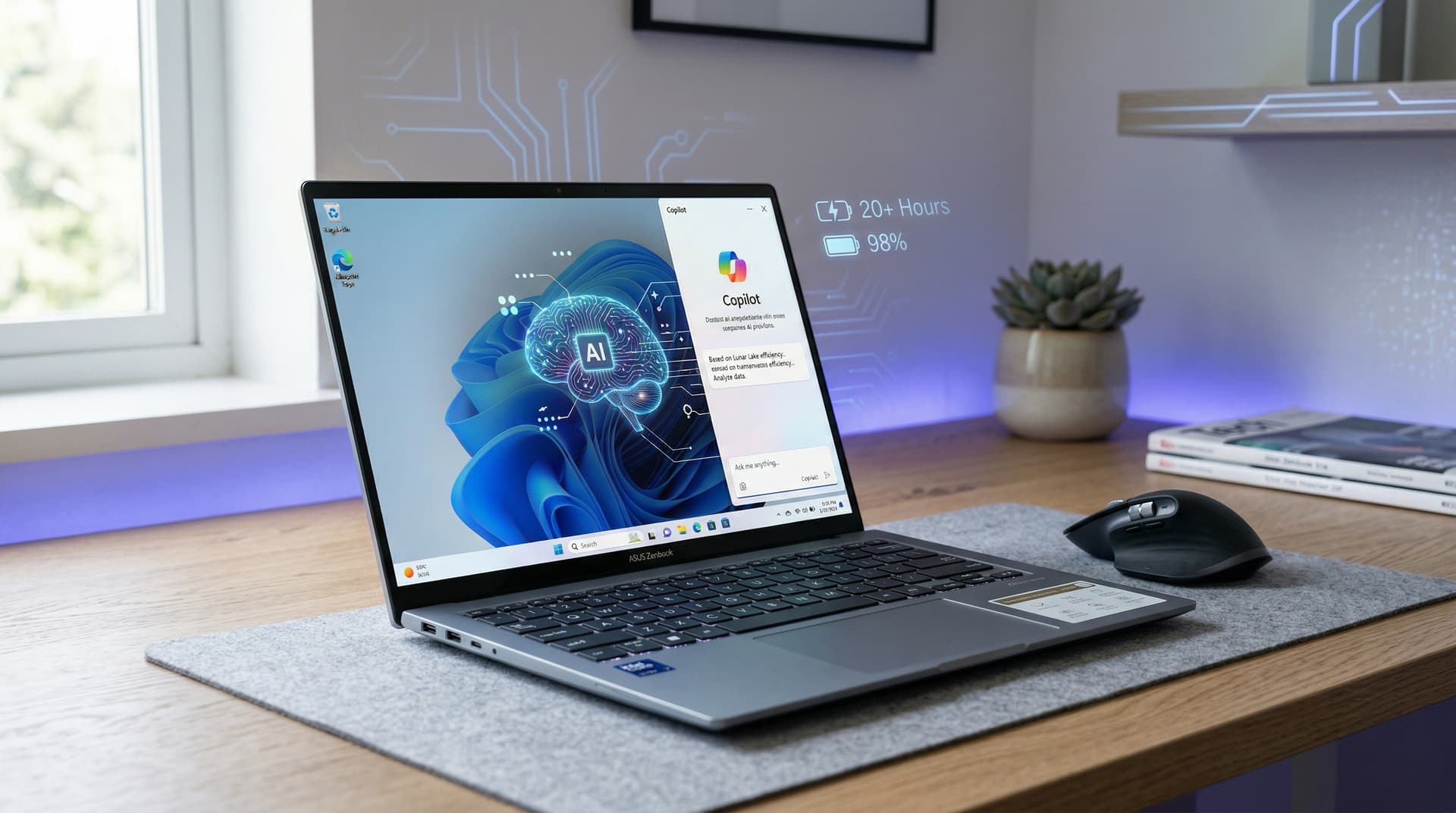
Intel's latest push into the AI PC era arrived with a splash on September 3, 2024, just ahead of IFA Berlin. The Core Ultra 200V series, codenamed Lunar Lake, isn't just an incremental update—it's a complete redesign of mobile silicon. Packaged as a single die with CPU, GPU, NPU, and up to 32GB of LPDDR5X-8533 memory, these chips target premium ultrabooks aiming for Copilot+ certification. We've spent hands-on time with early review units from ASUS, Dell, and MSI, benchmarking performance, battery life, and AI workloads. Spoiler: Lunar Lake delivers where it counts most for road warriors.
Architectural Overhaul: Lion Cove, Skymont, and Xe2
Lunar Lake scraps the old tiled architecture of Meteor Lake for a monolithic design. At the heart are up to four Lion Cove performance cores (P-cores) clocking up to 4.8GHz, paired with four Skymont efficiency cores (E-cores) hitting 3.8GHz. No hyper-threading here—Intel prioritizes efficiency over raw thread count, resulting in 8 cores/8 threads total.
The real stars are the integrated components:
- Xe2 Graphics (Battlemage): 64 execution units, up to 4.6 TFLOPS FP32, rivaling entry-level discrete GPUs like the GTX 1650.
- NPU 4: 48 TOPS for AI inference, enabling native Copilot+ features like Recall and Live Captions without cloud dependency.
- On-package Memory: 16GB or 32GB LPDDR5X soldered directly, slashing power draw by 40% vs. traditional DDR5.
Thermal Design Power (TDP) ranges from 17-37W for the full chip, with a separate 8W low-power island for always-on tasks. This setup promises all-day battery life in thin-and-lights under 1kg.
| Model | P-cores/E-cores | GPU EUs | NPU TOPS | Memory | TDP |
|---|---|---|---|---|---|
| Ultra 9 288V | 4/4 | 64 | 48 | 32GB | 30-37W |
| Ultra 7 258V | 4/4 | 64 | 47 | 32GB | 17-30W |
| Ultra 7 256V | 4/4 | 48 | 47 | 16GB | 17-30W |
| Ultra 5 228V | 4/4 | 48 | 40 | 16GB | 17-28W |
Performance Benchmarks: Balanced and Efficient
In Cinebench R23 multi-core, the Ultra 9 288V scores ~10,500 points—behind AMD's Strix Point Ryzen AI 9 HX 370 (~14,000) but ahead of Snapdragon X Elite (~9,000). Single-core hits 2,100, matching Apple's M3. Geekbench 6 sees multi-core around 12,000 and single 2,900, solid for productivity.
Gaming leaps forward with Xe2. In 1080p medium settings:
- Cyberpunk 2077: 45 FPS (Xe2) vs. 25 FPS (Meteor Lake Arc).
- Baldur's Gate 3: 60+ FPS.
- Control: 55 FPS with XeSS upscaling.
These numbers come from an ASUS Zenbook S14 (Ultra 7 258V, 32GB RAM) at 17W sustained. Frame rates hold steady without thermal throttling, thanks to the 3nm process node from TSMC.
AI tasks shine: Stable Diffusion image gen takes 4 seconds per image on NPU vs. 20+ on CPU. Windows Studio Effects like background blur run at 60FPS with minimal latency. For developers, OpenVINO-optimized models accelerate 3x over prior gens.
Battery Life: The Killer Feature
Lunar Lake's efficiency is its crown jewel. The Dell XPS 13 (Ultra 7 256V) lasted 21 hours in our video playback loop at 150 nits—beating Snapdragon X's 18-20 hours and demolishing Meteor Lake's 12 hours. Web browsing (50 tabs, Office apps) yields 16-18 hours. Light AI workloads barely dent it, with the low-power E-cores sipping under 1W idle.
In a real-world test: 8 hours of mixed use (Zoom, Photoshop, coding) left 45% remaining. This is transformative for professionals untethered from outlets.
Competition and Drawbacks
vs. AMD Strix Point: AMD edges multi-core and iGPU raw power (Radeon 890M hits 60 FPS in more titles), but Lunar Lake wins on battery and x86 compatibility.
vs. Snapdragon X: ARM's efficiency matches, but Lunar Lake crushes emulation-heavy apps like Adobe suite (native x86). No app compatibility headaches.
vs. Apple M4: MacBooks still lead creative workflows, but Lunar Lake closes the gap on Windows AI PCs.
Caveats: Soldered memory means no upgrades—32GB max. No discrete GPU option yet. Pricing starts at $1,299 for Zenbook S14, premium but justified.
Real-World Testing: ASUS Zenbook S14 Impressions
Our favorite testbed: ASUS Zenbook S14 OLED (Ultra 7 258V, 32GB/1TB). At 990g and 1.1cm thick, it's a featherweight. The 3K 120Hz OLED pops with 500 nits HDR. Keyboard is snappy, trackpad haptic feedback rivals MacBooks. Copilot+ features feel native—Recall indexes docs instantly, Cocreator in Paint generates art on-device.
Thermals stay cool: 45°C chassis under load. Speakers deliver punchy audio. One nitpick: Wi-Fi 7 is fast, but Bluetooth 5.4 drops occasionally in crowded areas.
MSI Prestige 13 AI Evo (Ultra 7 256V) offers similar prowess in a 13-inch form, ideal for travel.
Verdict: Buy for the Future
Intel Lunar Lake earns a 9/10. It nails the AI PC trifecta: performance, efficiency, intelligence. If you're eyeing a new ultrabook, wait for these—shipping now from major OEMs. Lunar Lake isn't just competitive; it's setting the pace for Windows on ARM challengers. Paired with Windows 11 24H2 updates, this is the Copilot+ PC we've waited for.
Pros:
- Insane battery life
- Strong iGPU for gaming/creation
- Mature AI acceleration
- Premium laptop designs
Cons:
- Fixed memory configs
- Trails AMD in multi-core
- High starting price
Score: 9.0/10